
Moving into a new house: a checklist for the week before, moving day, and after
A moving company moves boxes. Messy Buns Organized Spaces handles the part that decides where they go.
Someone has to decide what goes in the boxes, in what order, and where each one lands on the other side. Different job entirely.
Most people find this out the hard way. The truck leaves, the boxes arrive, and then there’s a house full of cardboard and no idea which one has the coffee maker. Three weeks later the garage is still stacked.
A move has two hard days. The one when the truck loads, and the one when you try to live in the new house. Movers own the first one. The second is where an organizing team earns its keep.
Here’s the actual sequence, start to finish. What happens before the truck, what happens during, and how to unpack after moving without living out of boxes for a month.

What does an organizing team do that movers don’t?
Movers handle transport. They’re good at it. What they don’t do is make decisions about your belongings.
Editing before anything gets packed
The first job isn’t packing. It’s deciding what deserves to be packed.
Every box you don’t move is transport you don’t pay for, and a box you don’t have to unpack at the other end. Moving a garage full of things you were never going to keep is one of the more expensive ways to delay a decision.
So the edit happens first, before a single roll of tape comes out.
Packing by destination room, not origin room
This is the part that changes everything and almost nobody does it alone.
Most advice on how to pack for a move groups things by where they currently live. We pack by where they’re going. The contents of your old hall closet might split across three rooms in the new house, so they get packed that way and labeled for the new floor plan.
That’s also the honest answer to how to label moving boxes. Not by contents. By destination.
Boxes land in the right room on arrival instead of being carried twice.
Coordinating everyone else
Movers, builders, cleaners, and sometimes a flooring crew running late. Someone has to hold all of those schedules against each other.
When that’s us, it isn’t you relaying messages from a parked car outside the old house.
The full scope sits on the move concierge service page.
What happens in the week before the truck arrives?
The quiet work. And the part that decides how the rest goes.
The edit, room by room
We work through the house together. Keep, donate, sell, toss.
Nobody gets rushed on the personal things. Photographs, kids’ artwork, a parent’s china. Those take the time they take, and the rest of the house moves fast enough to make room for that.
Donations leave before the truck does
Anything going gets loaded and dropped off, with a receipt for your records on move work.
It doesn’t sit in the garage waiting on a Saturday trip. Which matters more than it sounds, because the pile in the garage is exactly what gets thrown on the truck at the last minute when the movers are early.
Packing the kitchen, and packing with the floor plan in hand
Boxes get labeled against the house you’re going to, not the one you’re leaving.
How to pack a kitchen for moving is the question that stalls most households, because it’s the room with the most fragile items and the most daily dependence. We pack it last and unpack it first, which is the reverse of how most people do it.
For new builds, we walk the empty house first. That way containment is measured and on site before the truck pulls up, rather than ordered three weeks after you move in.
What does moving day actually look like, hour by hour?
Load, unload, then a very specific order of operations. Think of it as a moving day checklist that someone else is holding.
Load and unload oversight
Someone is at both ends. Boxes go on the truck in a sequence and come off into the right rooms, which is the whole payoff of labeling for the destination.
The night-one order
Not everything gets unpacked on day one. Some things have to be.
The sequence runs:
- Beds built and made
- Bathrooms stocked
- Kitchen usable
That’s the difference between sleeping in your new house and camping in it. You can shower, sleep, and make coffee the next morning without opening a single box.
Cardboard leaves as we go
Boxes and packing paper go out as they empty, not into a pile in the garage.
That pile is how a move stalls. It fills the one space you need clear, and then the undecided things start landing on top of it.
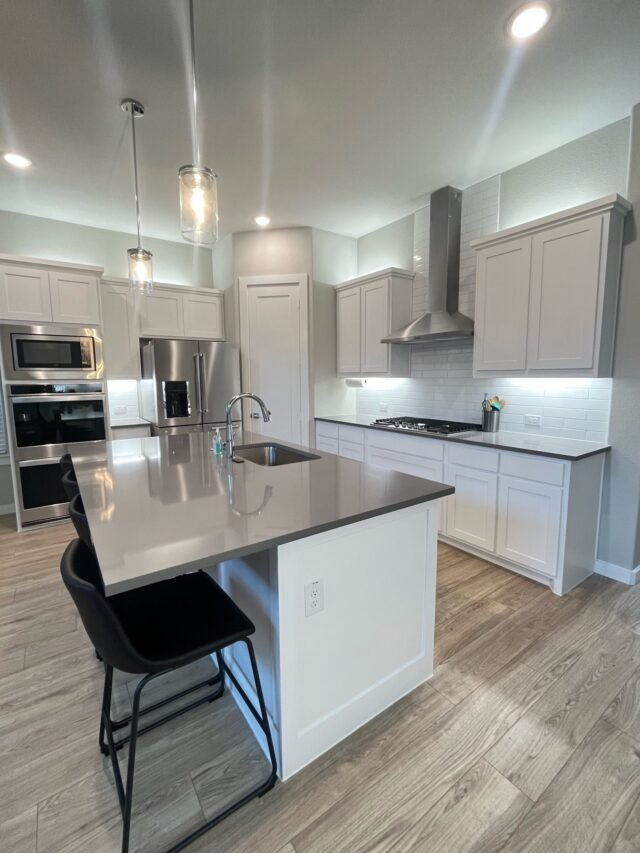
What happens in the days after the move?
The systems get built as each space fills, so nothing is unpacked twice. That’s the real answer to how to organize after moving: do it once, as you go, not twice.
Kitchen and pantry first
The kitchen gets zoned around how the household actually cooks, not by cabinet order. Baking near the mixer. Everyday dishes within reach of the dishwasher.
The pantry gets set against real habits too, which is easier in a new house than anywhere else. There’s no existing arrangement to argue with. See how the same thinking applies to kitchen organizing.
Then closets, garage, and the rooms nobody looks at
Closets get zoned as clothes come out of wardrobe boxes, so the sorting happens once.
The garage is done deliberately rather than last, because in most moves the garage becomes the room every undecided thing goes into. Handle it early and it stays a garage.
Low-use rooms come last. Guest rooms, offices, craft space. They can wait, and they should.
This is unpacking and home setup, and it’s available on its own if the packing side is already handled.
What if you’re relocating from out of state?
Then the whole unpack can be finished before you arrive.
Boxes emptied, systems built, cardboard gone. You get photographs of each room as it’s completed, so you’re not guessing from two states away about what the house looks like.
People land, walk in, and the house works. That’s the point of it.
For new construction, walking the empty house first matters even more at distance. Measurements get taken before the truck is loaded, so containment arrives with the furniture instead of weeks behind it.
Finished work from real DFW moves is in the portfolio.
The short version
The whole thing, as a moving into a new house checklist:
- Edit first, so you don’t pay to transport things you were never going to keep.
- Donations leave before the truck does, with a receipt.
- Pack and label by destination room. That is the step that makes the unpack fast.
- Pack the kitchen last, unpack it first.
- Night one runs in order: beds, bathrooms, kitchen.
- Boxes and packing paper leave the same day they are emptied.
- The unpack runs kitchen first, then pantry, closets and garage, with low-use rooms last.
- Relocating from out of state, the whole unpack can be finished before you land, with photographs of each room as it is done.
- Same published rate as every other service, $160 an hour per team, quoted per project for a full house.
Frequently asked questions
Do you pack as well as unpack?
Yes. We cover both ends, starting with an edit of what’s worth moving, then packing by destination room and labeling for the new floor plan. If your packing is already arranged, unpacking and home setup can be booked on its own. Both run on the same published hourly rate as every other service, $160 an hour per team.
How long does a full house unpack take?
Several consecutive days with a team on site, and it’s quoted per project rather than by the room. Size, box count and how much editing happened before the move all change the timeline. You get an hour estimate once we’ve seen the house and the box count, before anything is booked.
Do I need to be there?
For parts of it. You’re needed at the start to set priorities, and for decisions on personal and sentimental items. The rest runs while you’re at work or handling everything else a move demands. Out-of-state clients often aren’t there at all, and get photographs of each room as it’s finished instead.
What happens to the boxes and packing paper?
They leave as the team works, rather than stacking up in the garage. Emptied boxes and paper go out the same day they’re emptied. Anything sorted out during the edit is split into donate, sell and toss, with donations dropped off and a receipt provided on move work.
Is hiring professional unpackers worth it for a single room?
Usually not on its own. Professional unpackers earn their keep across a whole house, where the sequencing and the decisions compound. For one room after a move, a standard organizing session is the better fit and costs less. The discovery call will tell you which one your situation actually needs.
Planning a move in Dallas-Fort Worth?
Book a Free Discovery Call and walk us through the dates, the house you’re leaving, and the one you’re going to.