
How much does a professional organizer cost, and what are you actually paying for?
How much does a professional organizer cost? Messy Buns Organized Spaces publishes its rate. $160 an hour per team. You can find it without filling in a form.
That number is easy to find and hard to picture. You know roughly what an hour of house cleaning buys. An hour with a professional home organizer in Dallas-Fort Worth sorting a garage is fuzzier, so the rate can feel like a leap of faith.
An hour of organizing isn’t an hour of tidying. It’s decisions. Measured space. Labels built to survive a grocery unload on a Wednesday night. It’s also how an in-home organizing and decluttering session runs: a team working in a set order, which is why a room finishes in a day instead of a month of Saturdays.
So here’s the honest version. What happens on the clock. Why a pantry takes six hours and a garage takes sixteen. Where product costs sit. And how to tell if it’s worth it for your house.
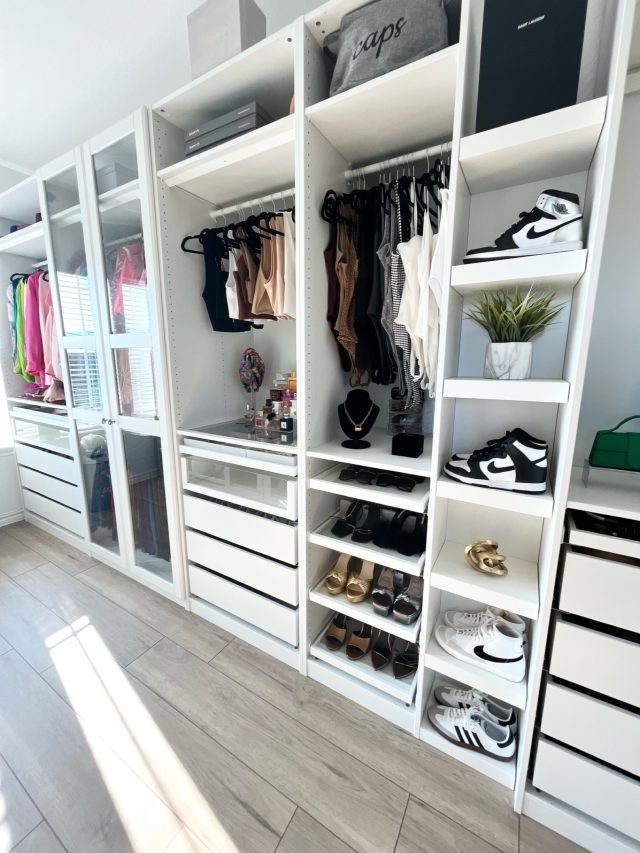
What happens in an hour of organizing?
What a professional organizer does in that hour is decide, mostly. Not tidy.
Two to four insured organizers arrive and work in a set sequence. The order matters more than the speed.
Everything comes out first
A space can’t be rebuilt while it’s half full. So the room empties.
Then it gets sorted. Keep, donate, sell, toss. You make the calls on anything personal or sentimental. We handle the lifting, the measuring, and the parts that stall most people out around hour three.
This is the slowest stage and the one that does the real work. Every later step depends on it.
Then zones, then containment, then labels
Zoning is deciding what lives where. Not by category on paper, but by how the room actually gets used. A baking zone near the mixer. Lunch supplies at kid height. Off-season storage somewhere that isn’t prime shelf space.
Containment comes after, and only after. Bins get specified against what’s actually staying, using what you already own wherever it works.
Labels come last. Clear enough that your partner, your sitter, or a teenager unloading groceries puts things back in the right place without asking.
Then you get taught the system
The final step is a walkthrough. We go through every zone with you so the logic is yours, not ours.
A system only one person understands tends to fall apart the first busy week. That walkthrough is the difference between organizing that holds and organizing that photographs well.
Donations leave with the team the same day. Bags waiting in a garage for a trip nobody makes is how a room quietly refills.
That whole sequence is what the organizing and decluttering service covers, room by room.
Why does a pantry take 6 hours and a garage take 16?
Same rate. Very different rooms.
Decision density
A pantry is mostly food. Expiry dates make half the decisions for you.
A garage is paint cans, camping gear, tools, three sizes of holiday storage, and a box somebody labeled “misc” in 2019. Almost every item needs a judgment call, and judgment calls are what take time.
That’s the real driver. Not square footage. Decision count.
Vertical space and Texas heat
Garage organizing needs building, not just sorting. Storage goes up the wall and overhead, which means measuring, mounting and load-checking.
North Texas adds a wrinkle. A garage hits brutal temperatures by July, so containment has to be rated for it. Cardboard sags. Cheap plastic warps. Getting that wrong means doing the room twice.
How long it takes to organize a pantry, closet or garage
Rough planning figures, not quotes:
- Pantry: 6 to 10 hours
- Primary closet: 8 to 12 hours
- Kids’ room or playroom: 6 to 10 hours
- Garage: 10 to 16 hours
- Full home unpack: multiple days, quoted per project
If you’ve looked up how to organize a pantry or how to organize a garage and worked out it’s a bigger job than a weekend, these are the hours behind that. Every space is different, and you get an hour estimate from photos before anything is booked. The full tables live on our published hourly rate and per-room ranges.
Want to see how the two rooms differ in practice? Compare pantry organizing against garage organization.
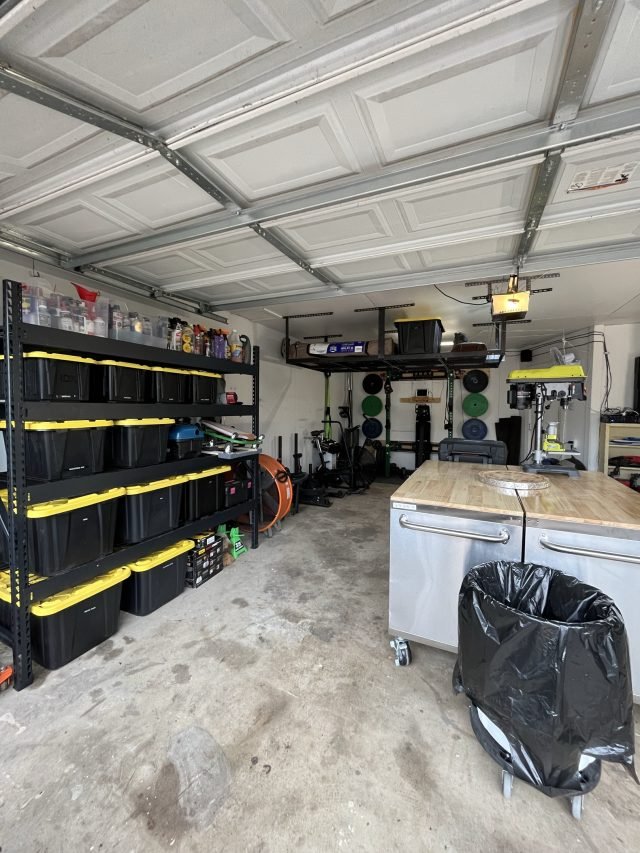
Are organizing products included?
No. The hourly rate is labor.
Bins, baskets, hangers and shelving are billed separately at cost. Spend ranges from a few hundred dollars for one room to several thousand across a house.
Whole-home projects with custom shelving can reach five figures.
Nothing gets bought until the sorting is done
There are no product packages here, and that’s deliberate.
Buying containment before you know what’s staying is how people end up with bins that don’t fit and a receipt they resent. So the sorting happens first, measurements come second, and the shopping list is written against what’s actually left.
You see the cost before anything is purchased. That’s the whole point of the estimate.
Working with what you already own
Plenty of clients want the labor and none of the shopping. That’s a completely legitimate choice and it happens often.
Most homes already have more usable containment than the owner thinks. It’s just spread across four rooms holding the wrong things.
What do you need to do before we arrive?
Nothing. Truly nothing.
Don’t clean, don’t sort, don’t buy bins
Pre-cleaning hides the problem. Pre-sorting moves the mess somewhere we can’t see it. Pre-buying containment locks in decisions before anyone has measured.
We want the room as it really is. That’s the only way to build something that fits your actual life instead of a staged version of it.
And no, nobody is judging the state of it. We’ve organized garages that hadn’t seen the floor in years.
Do you have to be home?
Not for the whole thing.
You’re needed at the start to set priorities, and reachable by text for the keep-or-go calls on personal and sentimental items. Everything else runs without you. Most clients work, run errands, or do school pickup while the sorting happens.
How do you know if it’s worth it for your house?
Three honest questions.
How many weekends has this project already survived?
Plenty of people set out to declutter their home on their own and stall in the same place. If a room has been on the list for two years, it isn’t a time problem. It’s a decisions problem, and decisions are easier with someone in the room who has no attachment to your things.
Do your systems keep collapsing?
Organizing that fails within a month usually failed at the design stage. It was built around how someone wished the household worked, not how it actually does.
If you’ve done the same closet three times, a fourth pass on your own is unlikely to land differently.
Is something about to change?
A move. A baby. Downsizing. Combining households. These are the moments when clutter stops being annoying and starts costing real money, because you pay to transport and store things you were never going to keep.
Editing before a move is cheaper than moving the boxes.
If you want to see what finished work looks like before deciding, the portfolio has real before and afters from DFW homes.
For a broader view of what to ask any home organizer before hiring, the National Association of Productivity and Organizing Professionals keeps a general guide.
The short version
- $160 an hour per team, and a team is two to four insured organizers working in a set order.
- The hour buys decisions, not tidying. Everything comes out, gets sorted, then zoned, contained and labeled, and you get walked through the finished system.
- Rooms differ by decision count, not square footage. A pantry runs 6 to 10 hours. A garage can reach 16.
- Organizing products are separate and billed at cost, and nothing gets bought until the sorting is done.
- You do nothing to prepare, and you only need to be there at the start.
- If a room has outlasted two years of weekends, or a move or a baby is coming, that is usually the point where paying for it pays off.
Frequently asked questions
What does a professional organizer’s hourly rate include?
Labor for the organizing team on site at $160 an hour per team, with each additional organizer beyond two adding $40 an hour. That covers sorting, zoning, containment, labeling, the final walkthrough, and hauling donations away the same day. Organizing products are billed separately at cost. You get a written estimate before any work is booked, so the number isn’t a surprise on the day.
Do I have to buy new bins?
No. We work with what you already own whenever it does the job, and plenty of clients choose exactly that. If new containment makes sense, it’s specified after sorting, measured against what’s staying, and billed at cost. Nothing gets purchased without you seeing the spend first. There are no product packages.
Is a deposit required, and is it an extra cost?
A deposit is required and it varies by the size of the project. It isn’t an added fee. The full amount is credited to your final invoice, so it comes off the total rather than sitting on top of it. Payment is accepted by credit and debit card, Zelle, Venmo, or cash.
How long does a single room take?
Most single spaces run 6 to 12 hours. A pantry or a kids’ room is usually one day. A primary closet often runs a little longer, and a garage can reach 16. Whole-home unpacks run across several consecutive days with a team on site. You get an hour estimate from photos before booking.
What happens to the things I don’t keep?
They get sorted into keep, donate, sell and toss as we go. Donations are loaded into our vehicles and taken to drop-off the same day, so nothing sits in your garage waiting on a trip that never happens. On move work, you get a donation receipt. Items you want to sell are set aside separately.
Ready to find out what your space would take?
Book a Free Discovery Call and tell us what’s driving you crazy, what you’ve already tried, and what the room looks like on a Tuesday night.
No pressure, and no sales script.